




VR game development stages and advantages
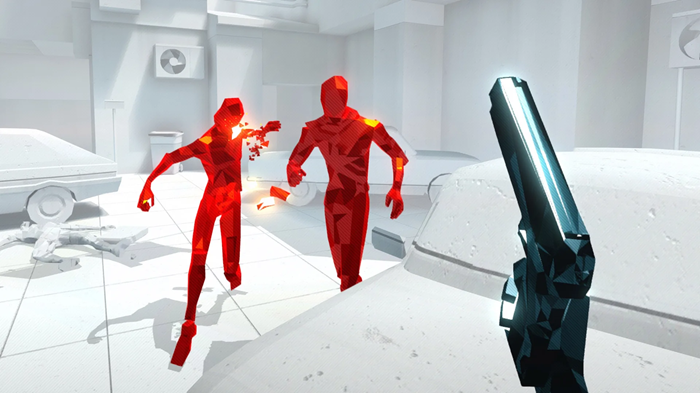
VR games are interactive worlds that deceive the usual senses and create a sense of presence: the player doesn’t simply control a character, but feels as if they’re inside the scene. Therefore, development is built around human perception—sight, hearing, balance, reaction to movement and distance.
During the development process, it’s important not only to create beautiful graphics but also to ensure comfort: the correct frame rate, predictable controls, easy navigation, and clear interactions. It’s this combination of technology, design, and psychophysiology that distinguishes VR projects https://battlestart.com/ from traditional games.
Advantages of VR Games: Why the Format is Developing
The effect of presence is the main advantage of VR: the player is not an observer, but a participant. This heightens emotions, makes simple actions meaningful, and increases engagement, especially in horror, simulation, adventure, and interactive storytelling.
- Natural interactions: You can aim with your hands, grab objects, and interact with gestures, increasing the sense of control.
- New depth of learning and training: VR is suitable for simulations where spatial reasoning and practice are important.
- Stronger sense of scale: The height, distance, and size of objects are felt physically, not just in a picture.
- Activity and engagement: Many VR games add movement, improving dynamics and physical participation.
- Social scenarios: In multiplayer VR projects, communication through gestures and body positioning makes interactions more lively.
Modern VR games excel where emotion, tactility, and space are important: research Locations, precise actions, the element of surprise, and contact with objects. Learn more about games on the website.
When developed correctly, VR combines technological innovation and practical value: from entertainment to training and simulations. Therefore, creating VR games is a process that blends programming, 3D production, UX design, and an understanding of how people experience virtual reality.
Selection of a VR Platform and Target Devices for an Interaction Scenario
Choosing a VR platform doesn’t start with the «most powerful» headset, but with a description of the scenario: where the user will be (at home, in the classroom, at work), how many people will be participating simultaneously, how long the session will last, what actions are critical (precise capture, movement, interaction with the interface), and what budget, safety, and maintenance constraints exist.
Next, the scenario is translated into technical requirements: tracking type, controllers and degrees of freedom, acceptable latency, graphics quality, required sensors (hands/eyes/face), space requirements, offline operation, content security, and deployment. The more precisely these parameters are formulated, the less risk there is of choosing a platform that is «strong» on paper but inconvenient in real-world use.
How to Match Scenario and Device
1) Determine the interaction format and minimum required VR «depth»:
- Seated/standing scenes with a focus on the interface and observation: convenience, clear text, and simple navigation are most important.
- Room-scale (movement within a zone): stable tracking, safe boundaries, and precise controllers are critical.
- Intensive physics and manipulation (simulators, trainers): low latency, reliable controllers, and predictable interaction behavior are important.
- Social scenarios (multiplayer, group training): voice/avatars, moderation, ease of connection, and network stability are important.
2) Select a platform class By environment and operation:
- Standalone (self-contained headsets) – quick setup, minimal wiring and maintenance, convenient for training and demonstrations, easier to scale.
- PCVR – maximum graphics and computation for complex simulations, but higher requirements for computers, cables/space, and support.
- Console solutions – fixed configuration and predictable performance, but less flexibility in deployment and integration.
- Mobile VR (if applicable) – simplified experience, suitable for light interactivity, but limited in tracking/controllers and quality.
3) Check the key bottlenecks of the scenario against the capabilities of the devices:
- Tracking: 6DoF is mandatory for most VR games; For accurate simulations, stability during rapid hand movements and overlapping is important.
- Controllers and Input: Grip, triggers, gestures, haptic feedback; for a «hand without controllers,» check the quality of hand-tracking for your tasks.
- Comfort: Weight, balance, ventilation, interpupillary distance, strap comfort – affects long sessions and audiences without VR experience.
- Graphics and Performance: Target FPS, scene complexity, shaders, post-effects; standalone devices require more stringent optimization.
- Sound and Communication: Microphone/headphones, spatial sound, noisy environments (classroom/workshop).
- Safety and Hygiene: Replaceable pads, processing, zone control, demonstration modes.
- Deployment: device fleet management, updates, kiosk mode, offline mode, accounts, access restrictions.
4) Tie the choice to the target audience and context of use:
- Beginners: minimize complex control schemes, provide in-game training, and choose devices with an easy start.
- Professionals/training: prioritize accuracy, repeatability of exercises, and reliability over «pretty.»
- Children/teenagers: pay special attention to comfort, session duration, content control, and security settings.
- Mixed audience: adaptability is needed (multiple control schemes, UI scaling, comfort modes).
5) Run a pilot on 2-3 devices and Validate metrics with real content:
- Time to enter the experience (from power-on to gameplay);
- Control errors and tutorial clarity;
- Fatigue/motion sickness and frequency of interruptions;
- Tracking stability in your conditions (light, reflections, tight spaces);
- Cost of ownership: maintenance, updates, spare accessories.
Bottom line: the right VR platform is one that reliably supports your interaction scenario, not one that delivers maximum performance in a vacuum. First, define the requirements for movement, input, comfort, and operation, then choose a device class and validate the decision with a pilot. This approach reduces risks, simplifies development, and makes the VR game comfortable, understandable, and viable in real-world use.
Hello!! My name is Jeanine
I love to eat, travel, and eat some more! I am married to the man of my dreams and have a beautiful little girl whose smiles can brighten anyone’s day!