



EV as a home battery: should you wait for V2H or install storage now
An electric vehicle can hold far more energy than many wall-mounted home batteries. That fact has made vehicle-to-home power one of the most interesting ideas in residential energy. It has also created a practical question: should a homeowner wait for V2H, or install stationary storage now?
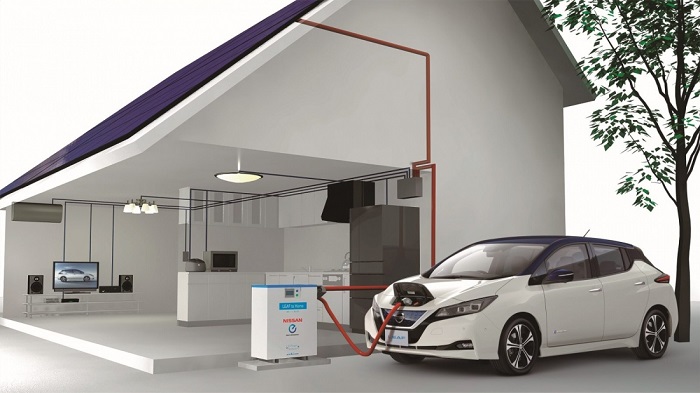
V2H means vehicle-to-home. A compatible EV and bidirectional charger allow electricity to flow from the car back into the house. V2G, or vehicle-to-grid, goes one step further by allowing power to flow back to the utility grid when programs and rules allow it.
The Promise Is Real
The Department of Energy says bidirectional EVs used as mobile battery storage can add resilience benefits, demand-response capability, and backup power when paired with capable charging equipment. That is not science fiction. The pieces are arriving.
The International Energy Agency reported that there were nearly 45 million EVs on the road globally in 2023, and EV battery deployment increased by 40% that year. More EVs means more parked battery capacity sitting in driveways, garages, fleet lots, and workplaces.
For homeowners comparing EV charging and storage products, the exciting part is obvious: the car could become part of the home energy system instead of only being a load.
The Catch Is Compatibility
V2H is not just a charger feature. The vehicle must support bidirectional power, the charger must be bidirectional, the home must have safe transfer equipment, and the local utility may require interconnection approval. The system also needs islanding protection so the house does not energize utility lines during an outage.
Another issue is availability. The EV may not be home when the outage starts. It may be sitting at 22% after a commute. The owner may need that remaining battery for transportation the next morning. A stationary home battery does not leave the driveway.
Where Stationary Storage Still Wins
Stationary batteries are boring in the best possible way. They stay connected, follow a schedule, reserve energy for backup, and coordinate with solar every day. They can also be sized around the house rather than around a vehicle purchase.
That does not make V2H a bad idea. It means V2H works best as part of an energy plan, not as a vague future substitute. A homeowner with solar, a stationary battery, and a bidirectional-ready EV charger may eventually have more flexibility than someone waiting for one perfect device.
The EV AC charging page shows how EV charging can be coordinated with solar and storage for daily use, even before full V2H participation becomes common in every market.
A Practical Decision Rule
Install stationary storage now if outages are frequent, solar export credits are poor, or the home needs dependable backup capacity. Consider waiting or planning wiring space for V2H if the current EV is bidirectional-capable, local rules are friendly, and backup urgency is low.
The most future-proof choice may be infrastructure readiness: enough panel capacity, a clean installation location, monitoring, and an energy-management platform that can later coordinate solar, battery, and EV charging.
V2H will likely become more common, but a home still needs power when the next outage arrives. For many households, the answer is not «car or battery.» It is a staged system where the house battery handles daily reliability and the EV becomes an additional energy asset when the hardware and rules catch up.
Hello!! My name is Jeanine
I love to eat, travel, and eat some more! I am married to the man of my dreams and have a beautiful little girl whose smiles can brighten anyone’s day!