




Gold, digital value, and the future of money
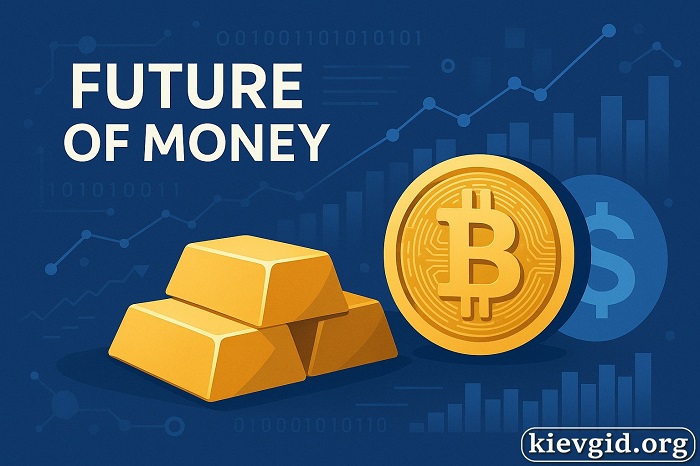
In the past decade, the world has been watching a quiet financial revolution unfold. Gold, the most ancient measure of wealth, now stands face-to-face with new digital assets — cryptocurrencies, tokenized real estate, blockchain-based securities. Economists call it a clash of two monetary civilizations: the one that came from the depths of history, and the one born from code, algorithms, and global networks.
The question sounds simple yet profound: what will money look like in the next 20 years — metal or digits?
Why Gold Still Matters
For thousands of years, gold has been the ultimate symbol of security. Unlike any digital asset, it does not disappear with a server failure, cannot be hacked, and is not dependent on electricity. Its value is tied to physical scarcity: gold is difficult to mine, expensive to transport, and nearly impossible to counterfeit.
During global crises — from world wars to inflation waves — gold repeatedly proved its reputation as a “safe haven.” When markets panic, gold rises. When currencies fall, gold remains stable. Central banks continue to accumulate it, and large investors treat it as a long-term anchor of confidence.
But the world is changing faster than ever.
The Rise of Digital Capital
While gold represents stability, digital assets represent change. Cryptocurrencies offer decentralization, transparency, and global accessibility. A transfer that once required a bank, a queue, and several days now takes seconds.
In emerging markets, where restrictions and instability are common, digital currencies became a tool of freedom: a way to store savings protected from local turbulence.
Blockchain technologies expand this idea further. Today, investors can own:
- digital shares,
- tokenized real estate,
- fractionalized art,
- algorithmic trading instruments,
- stablecoins tied to dollar or euro reserves.
Digital assets are incredibly young — yet their speed of growth is unprecedented.
Volatility vs. Reliability
The main critique of digital assets is volatility. Prices can rise or fall by 20% in a single day, driven by hype, news, or speculative demand.
Gold, by contrast, moves slowly. It grows gradually, without sudden crashes or explosive spikes.
This difference reflects the nature of both markets:
- Gold represents centuries of accumulated trust.
- Crypto represents innovation without a single global regulator.
But volatility is not always a weakness. For many investors, it is an opportunity — higher risk, higher potential return.
Generational Shift: Two Visions of Wealth
Surveys across Europe and the U.S. reveal an interesting pattern:
- older investors prefer gold, real estate, and bonds,
- younger generations choose crypto, tech stocks, and digital products.
It is not about right or wrong — it is about different ways of understanding money.
Gold is a material reminder that wealth must be protected.
Crypto is a belief that wealth must evolve.
Hybrid Strategies: When Metal Meets Algorithm
Experienced investors increasingly turn to combined strategies. Gold brings stability to a portfolio, acting as insurance during crises. Digital assets provide growth potential and diversification.
Analysts describe this approach simply:
“Gold saves, crypto accelerates.”
For many, this becomes the most balanced solution:
- 5–15% gold, depending on risk tolerance;
- 1–10% crypto for growth;
- the rest — classic investments.
Not extremes, but equilibrium.
What Will Money Become?
Predicting the future is risky — but several trends are already visible:
- Digital payments will dominate global transactions.
- Gold will remain a strategic reserve for governments and cautious investors.
- Tokenization will reshape real estate, business, and financial markets.
- Hybrid portfolios will outperform one-sided strategies.
Money is becoming more abstract, but trust still matters — and gold remains one of the most trusted assets in history.
The financial system of the future will not be a battlefield of gold vs. code, but a union of both.
Want to explore deeper?
Those who wish to explore this topic in greater depth can read the article “Gold vs. Digital Value: Who Will Prevail?” (original text in Russian), published on the Kyiv city portal “Invite Kyiv”:
https://kievgid.org/zoloto-protiv-cifry-kto-pobedit/
Hello!! My name is Jeanine
I love to eat, travel, and eat some more! I am married to the man of my dreams and have a beautiful little girl whose smiles can brighten anyone’s day!